
Why Co-parenthood?
Currently there are 46,000 children in out-of-home-care, and in most states that number has been steadily increasing. Even when family circumstances change, it’s rare that children return home to live with their families of origin.
The evidence tells us that when possible and safe, children experience the best outcomes when they remain connected to their family.
When families engage with the foster care system in Australia, we would hope that they heal and rebound out of crisis to better, safer lives and their children can be restored to them.
Instead, what we see is parents who have repeated lifelong engagements with the system; child after child. We also see intergenerational cycles of engagement in the child protection system for kids in care.
Parents who have had their children removed by child protection agencies are expected to make significant changes quickly and often without much support. We’ve seen firsthand that even in the toughest circumstances, families can make successful change when supported by a cohort the foster care system in Australia least expects: carers with the best interests of children and parents in mind.

Our learnings
After a year of international and national research exploring what works and what doesn’t in restoration, a few things became clear. When carers and parents work together, children and young people do better.
Restoration can be a critical opportunity to stop intergenerational cycles of engagement with child protection systems, by supporting children and parents to heal, learn and do things differently.
Throughout our insights journey, we met carers and parents who were ‘secretly’ working to build parent resilience, parenting skills, social networks and support services for parents and carers.
These families were demonstrating successful restoration rates that were uncommon anywhere else in the system. These families were motivated by the beliefs that all families go through tough times and the best way to support children is to support whole families.
We learnt from these families and are now sharing their experience to give more families an opportunity to reunite safely.
How Co-parenthood works
Co-parenthood is different from conventional foster care. Rather than caring for only the child, carers support a whole family with support from a professional parent advocate called the Family Link. It’s a shared parenting foster care model designed by families for families.
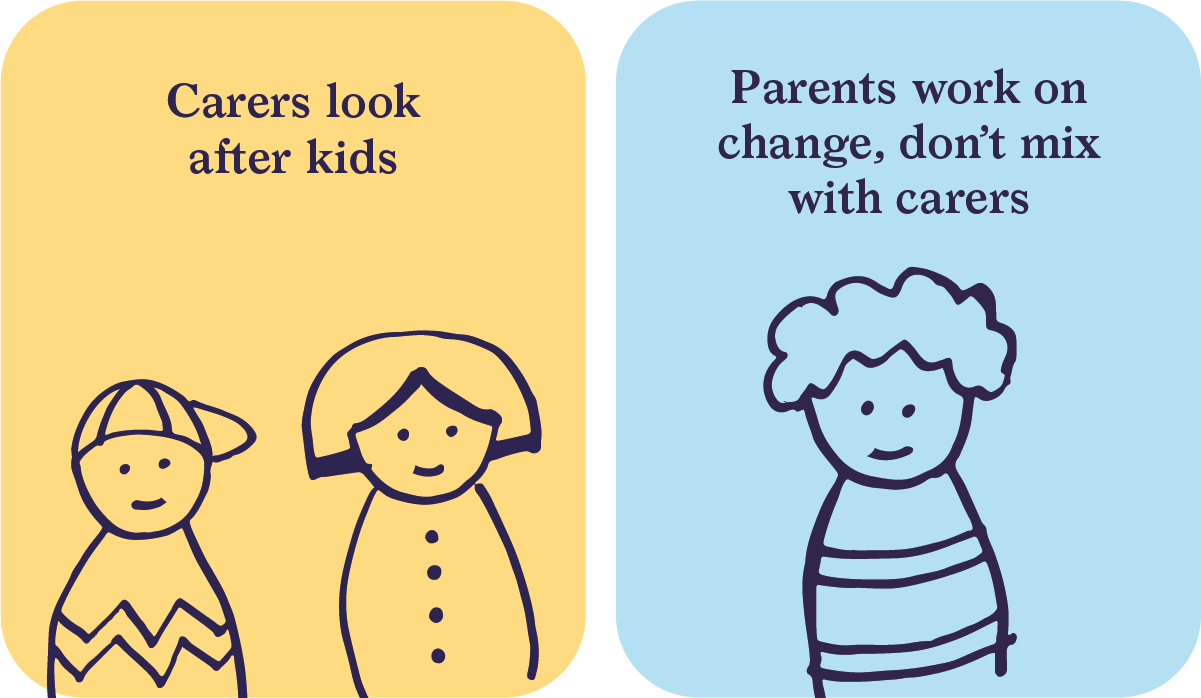
Foster care
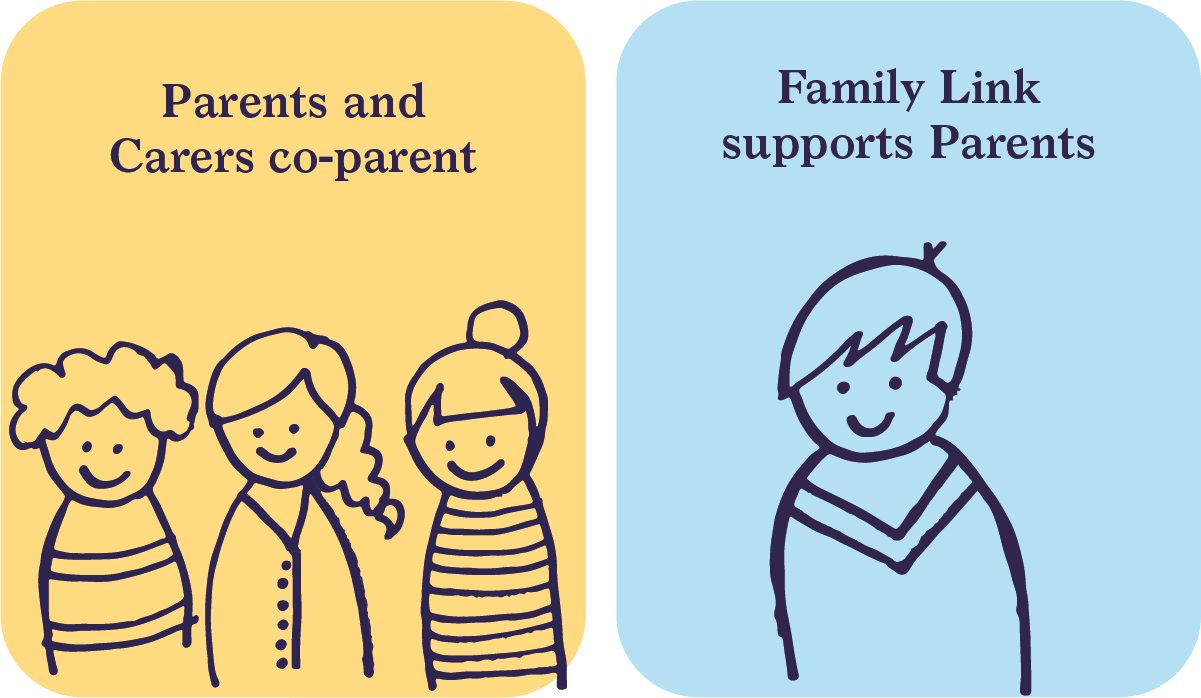
In the foster care system in Australia, carers look after kids, and parents work on change, while having no contact with carers.
Co-parenthood
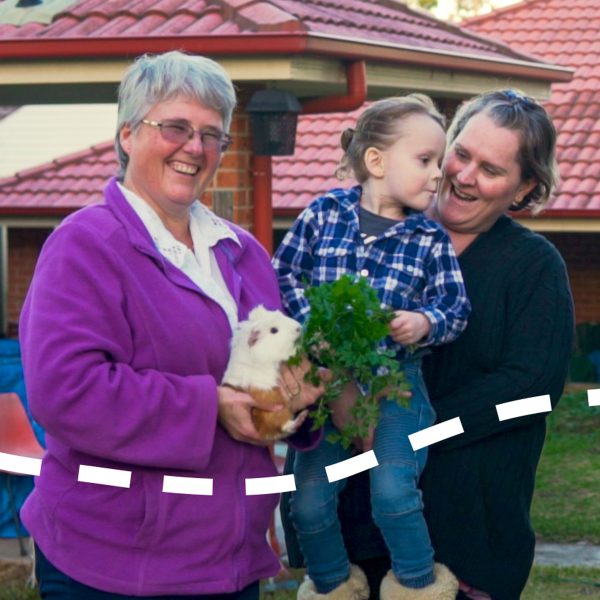
In Co-parenthood, parents and carers co-parent, and Family Link supports parents.
The Co-parenthood model
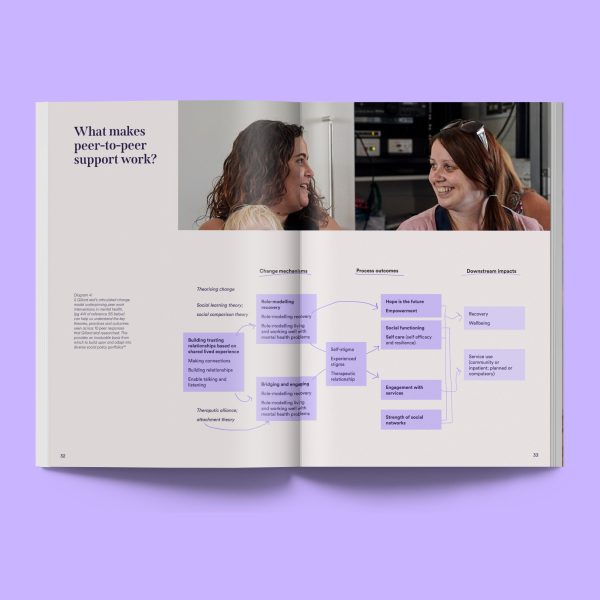
The shared parenting foster care model is built on a strong theory of change, underpinned by five evidence based pillars. The model articulates how we work towards outcomes for children, parents, carers and the wider system. There are three key stages:
Stage 1: Building trust, building collaborative relationships and finding levers for change.
Stage 2: Strengthening parenting capability and resilience.
Stage 3: Preparing for restoration, expanding social capital and maintaining behaviour change.
The Co-parenthood model map
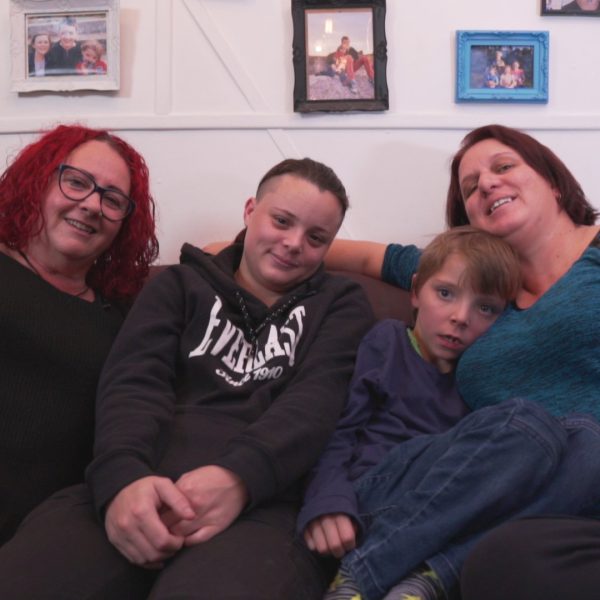
Early outcomes
Through designing and trialing this co-parenting model, we’re starting to see small shifts that can make a big difference. Families using this approach have seen three out of three successful restorations where parents and kids are doing well long after children have returned home.
Additionally, we’ve seen families within service providers that are good fits for restoration finally have the opportunity to explore restoration possibilities.
Lastly we’ve heard from carers, eager to be trained, that this was the type of program they’ve been waiting for.
What’s next?
The idea of families helping families is relevant across sectors and levels of risk. Other possible adaptations of the Co-parenthood model include:
- Co-parenthood for preservation to prevent kids from going into care
- Co-parenthood for young Aboriginal parents to keep families together
- Co-parenthood for care leavers seeking kinship care of younger siblings in care
- Co-parenthood for victim survivors needing a safe place to stay and recover with children