

What is Foster to Family?
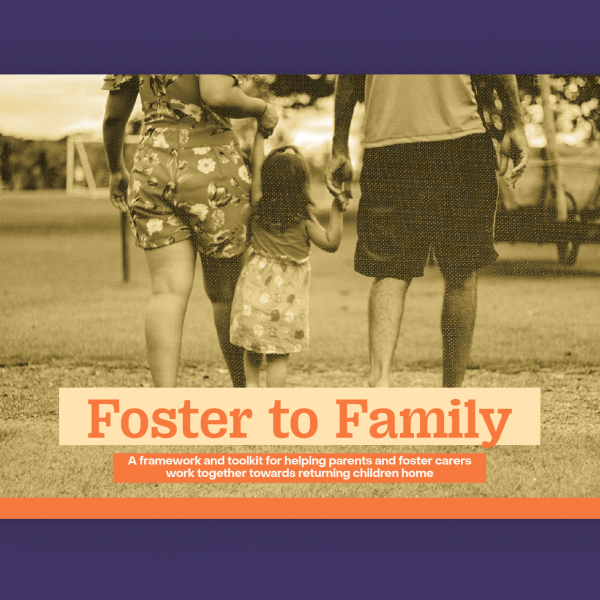
Foster to Family is a shared parenting approach to foster care, designed to support restoration. It gives:
-
Parents the support they need to get through tough times and work toward restoration
-
Children the chance to get the support and love they need while safely staying in touch with parents
The framework


The nine tools
How Foster to Family started
In 2016, the TACSI team spent two months working with foster carers and parents in NSW, including two families who were positively deviating from the norm in the system. They’d developed a new way for foster carers to support parents, and it was evident that this had led to deeper support for both parents and children in their care.
We saw these foster families:
- Involve parents in regular activities together with their child and foster carers
- Role model new ways of supporting their child/ren
- Actively work with parents to build parenting capacity
- Provide parents with live in-context learning experiences with their child/ren
- Commit to regular and ongoing communication with parents
From these small adapted actions to the foster care approach, we saw:
- Children more connected to place and culture
- Parents more hopeful and focused on the change needed to achieve restoration
- Parents feeling more supported
It was by spending time with these two families that we were able to codify and co-develop the Foster to Family practices, roles and approaches that are explored in the tools.
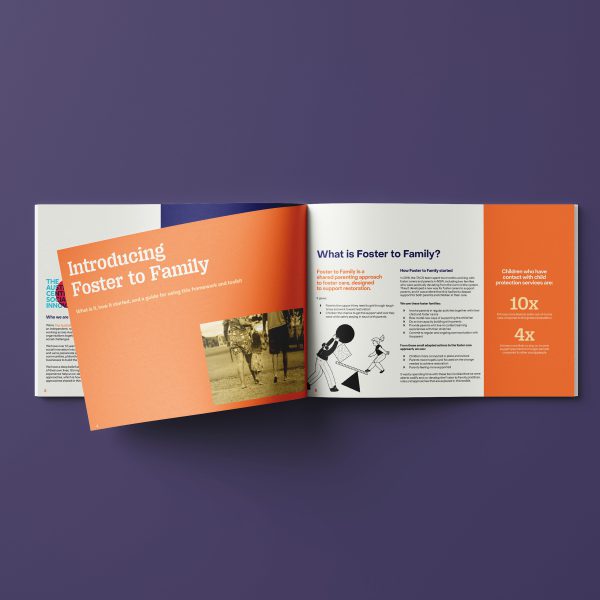
The Foster to Family framework
The Foster to Family framework is designed for practitioners, program designers, commissioners, managers; anyone who is keen to test and enable different pathways out of care so that together, we can support parents – when and where it’s safe to do so – have their children back in their care.
The framework includes:
Introducing Foster to Family
What is it, how it started, and a guide for using this framework and tools
Foster to Family framework
Principles, values, beliefs and key roles
Foster to Family foundational theories
Five foundational theories to help improve parents’ and children’s quality of life
Foster to Family tools
Activities and tools for using Foster to Family in your own organisation
What’s next?
Opportunities for further insight and discovery
The nine tools
Tool 1: Why Foster to Family is different
A downloadable poster designed to help you communicate the benefits of the Foster to Family approach to both carers and parents.

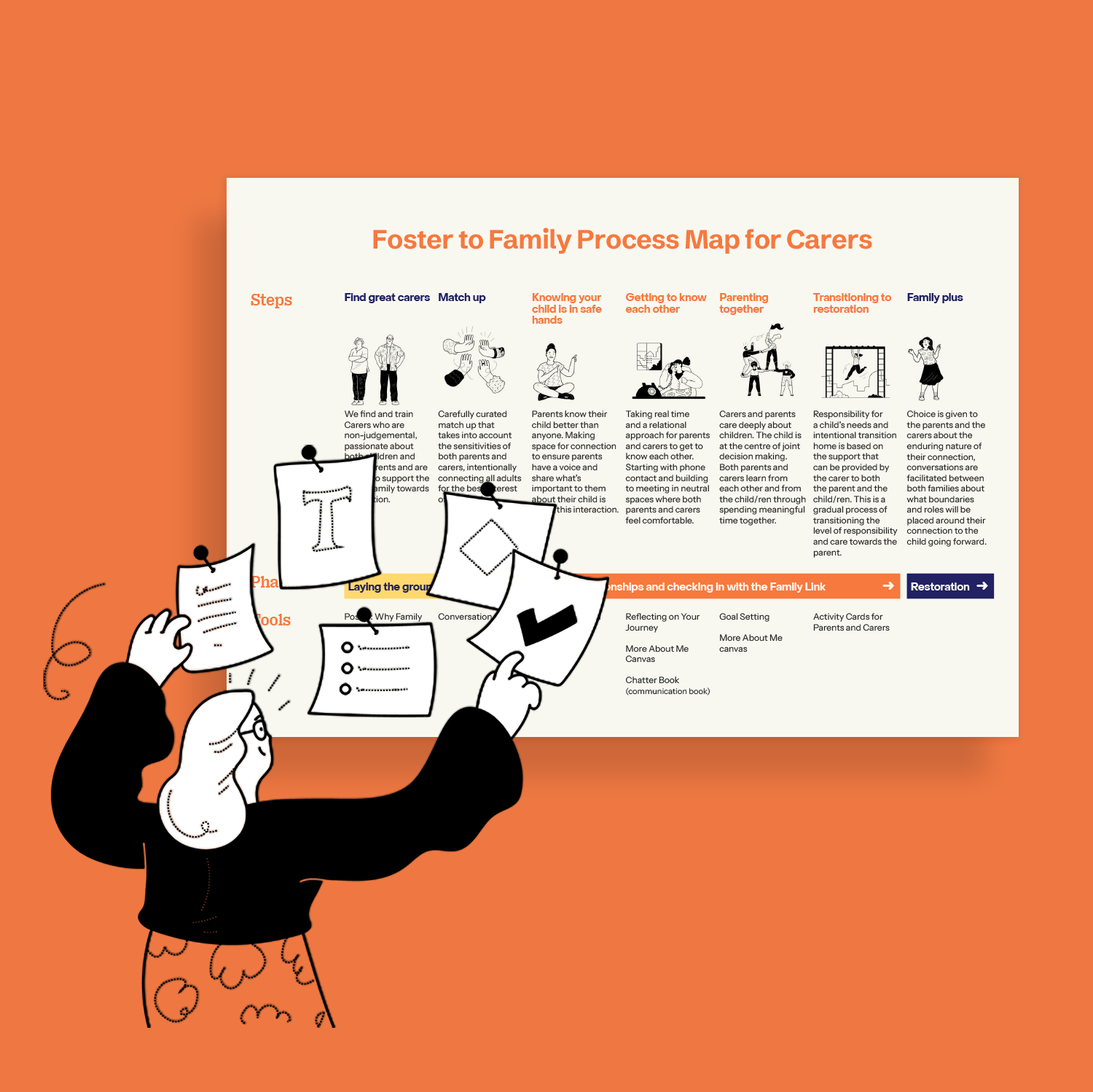
Tool 2: Process map for carers
Use this tool to explain the key stages of the Family to Foster journey. Can also be used as a tool between other professionals who are supporting this process.

Tool 3: Conversation cards
Use these to start conversations, build relationships, and increase the sense of choice and agency. They may also help to identify topics that are hard to identify on their own.
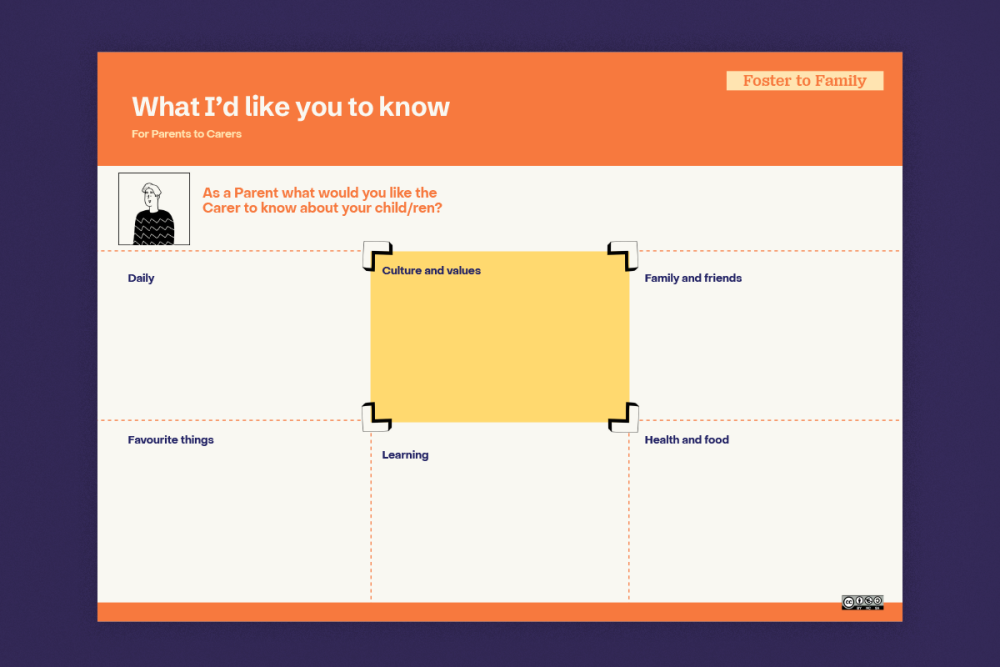
Tool 4: What I’d like you to know
This tool can help parents tell carers about their child, and also help carers ask the right questions so they know how to care for the child. This enables an honest and equitable exchange of what's important for the child from a parent’s understanding and helps support a carer’s curiosity to provide best outcomes for the child.
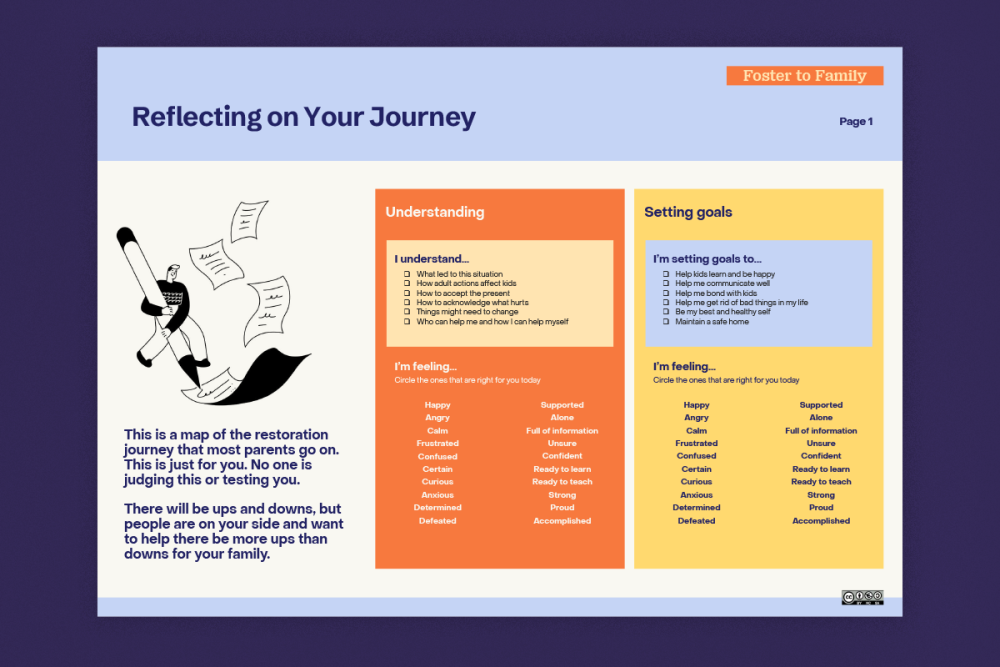
Tool 5: Reflecting on your journey
Use this tool with parents to help them track their journey toward restoration, prompt conversations about change, and create action plans. This flows into using the ‘more about me’ canvas as a goal setting tool.

Tool 6: ‘More me about me’ canvas
Use this tool to track progress, reflect on progress, celebrate positive changes and build confidence while also identifying key next supports. This journey is not linear and at times there can be setbacks, so re-visiting this over the course of connection can help identify next steps and maintain focus.
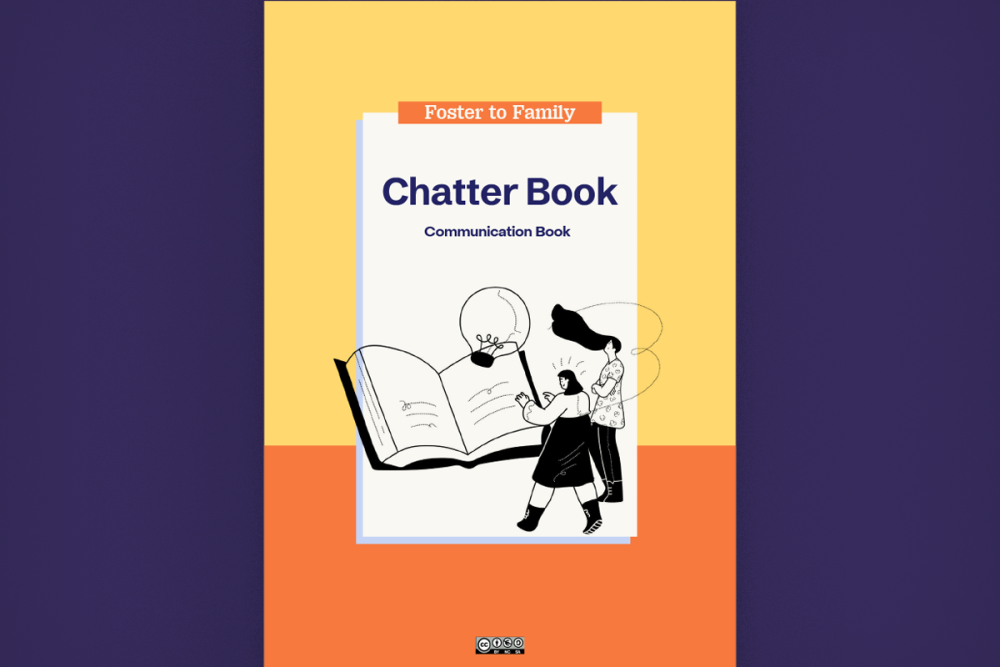
Tool 7: Chatter book
Parents and carers can use this to share information about the child; from routines that work well through to health information or general developmental milestones. This will help to provide a communication pathway between carers and parents with the focus on the child, and establish ongoing positive practices to support the child’s well being physically and emotionally. Additionally, the chatterbook provides a written routine that can be followed post restoration for continuity of care around the child.
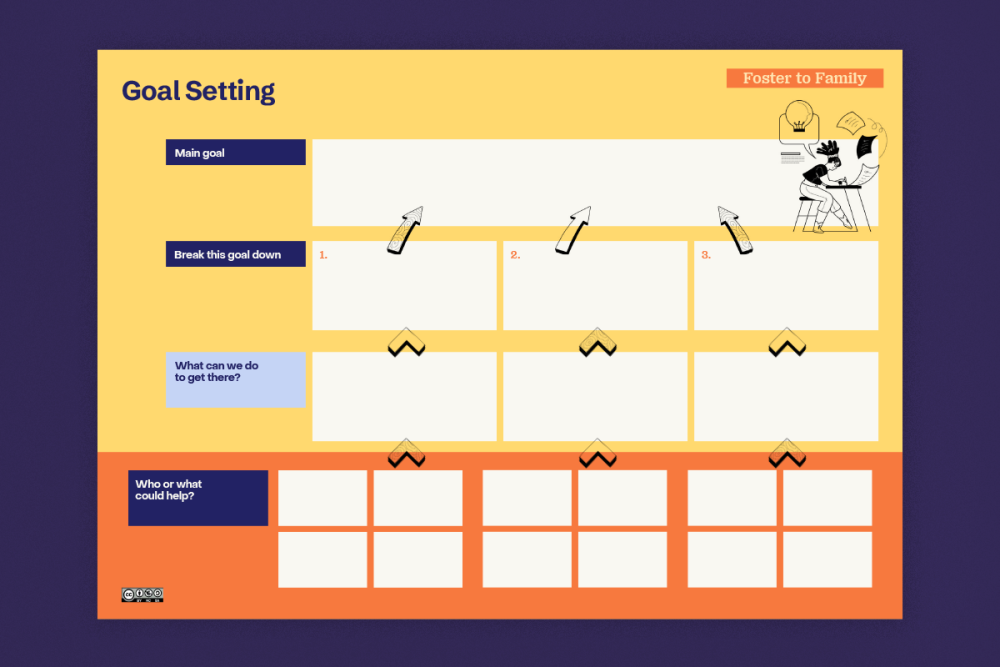
Tool 8: Goal setting
Use this tool to help set and track shared goals with both the carer and the parent. By articulating the shared goals in the restoration relationship, parents and carers can concretely articulate what actions or activities they can take together. To be successful in working towards goals it helps to break it into its component parts. This tool aims to do just this by also identifying the people or systems of support that need to be included in order to achieve these goals.

Tool 9: Activity cards for parents and carers
During access visits or planned arranged times, parents and carers are actively working together to participate in parenting capacity building activities. These activity prompt cards can be used by carers and parents as a guide to talk about a child's needs, helpful rituals, health professionals, or educational rhythms that may have been beneficial for the child and should be maintained for consistency once home.
Download the framework and tools
Fill in the form below to download the framework and tools packaged up in a Zip file. We’ll also send you an email containing the links for future reference.
If you’d like more information about Foster to Family or our peer-to-peer work, contact Danielle Abbott at danielle.abbott@tacsi.org.au.
"*" indicates required fields
Interested in using this framework or learning more?
Keen to use parts or all of this framework? Want to talk to us about specific aspects of the limited prototype? Get in touch with Danielle Abbott at danielle.abbott@tacsi.org.au.