
At the end of 2024, as we approached TACSI’s 15th birthday, we started to ask ourselves the question, “What should we become when we grow up?” What role should Australia’s national social innovation organisation play in the second quarter of the 21st century?
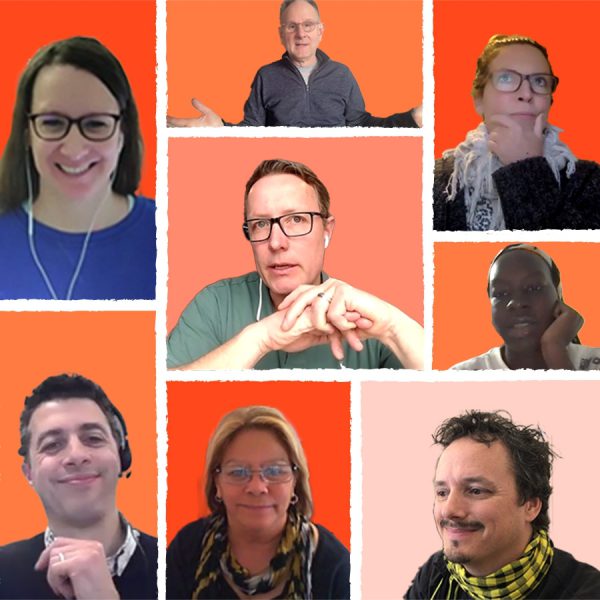
To help us with this existential question, we reached out to people who spend a lot of their time thinking about the future in Australia and beyond: Filmmakers, Aboriginal activists, technology experts, community leaders, venture capitalists.

We asked our future makers three questions in relation to their area of interest:
-
What track are we on in Australia?
-
What track would you like to see us on?
-
And if you had unlimited resources, what would you start right now to get us to a better future?
From these conversations, we learnt that the forces already strongly shaping our society – climate change, extremisms, machine intelligence – are likely to accelerate inequity and marginalisation. That is, unless we choose to do something about them.
We also learnt there’s no shortage of ideas to help us build a better future, but that many of those ideas are not widely known, or spread, or even considered serious.
What emerged was four areas of concern and opportunity
First Nations Relations
The connections between Indigenous and non-Indigenous people in Australia.
Human Machine Collaboration
Can we realise the social justice potential of machine intelligence?
Daily Life & Work
How can we actively shape what life and work to be more just, rather than life and work resulting from transitions elsewhere. Themes included addressing social isolation, creating 21st century compatible communities, young people and meaning,
Who shapes the future
Creating just futures by changing who decides the future, and how; new acts of democracy, social imagination and innovation. Investment and expertise in future-focused R&D is the norm in technology, defence, medicine and science; it’s recognised as a critical national strategic capability. However, there’s no real national focus on actively shaping imaginations and innovations for how we might live through the next quarter of the 21st century.
The four actions we need to take to make real change
We concluded from our conversations that if we want to create more just futures, we need to engage in four actions at a national level, with urgency:
-
Stretch social imagination: We need to expand Australia’s sense of possibility so that what’s unthinkable today becomes a sensible choice tomorrow. These conversations need to engage the public as much as they do decision makers.
-
Strengthen movements: We need to back and mobilise the people who will make these just transitions happen, including the people who generously gave their time to these conversations.
-
Iconic demonstrations: We need to invest into charismatic experiments that can inspire people into action and provide them with proof of what’s possible.
-
Orchestrate Innovation: We need to create R&D systems to spread know-how & innovations that will accelerate just transitions.
What’s next
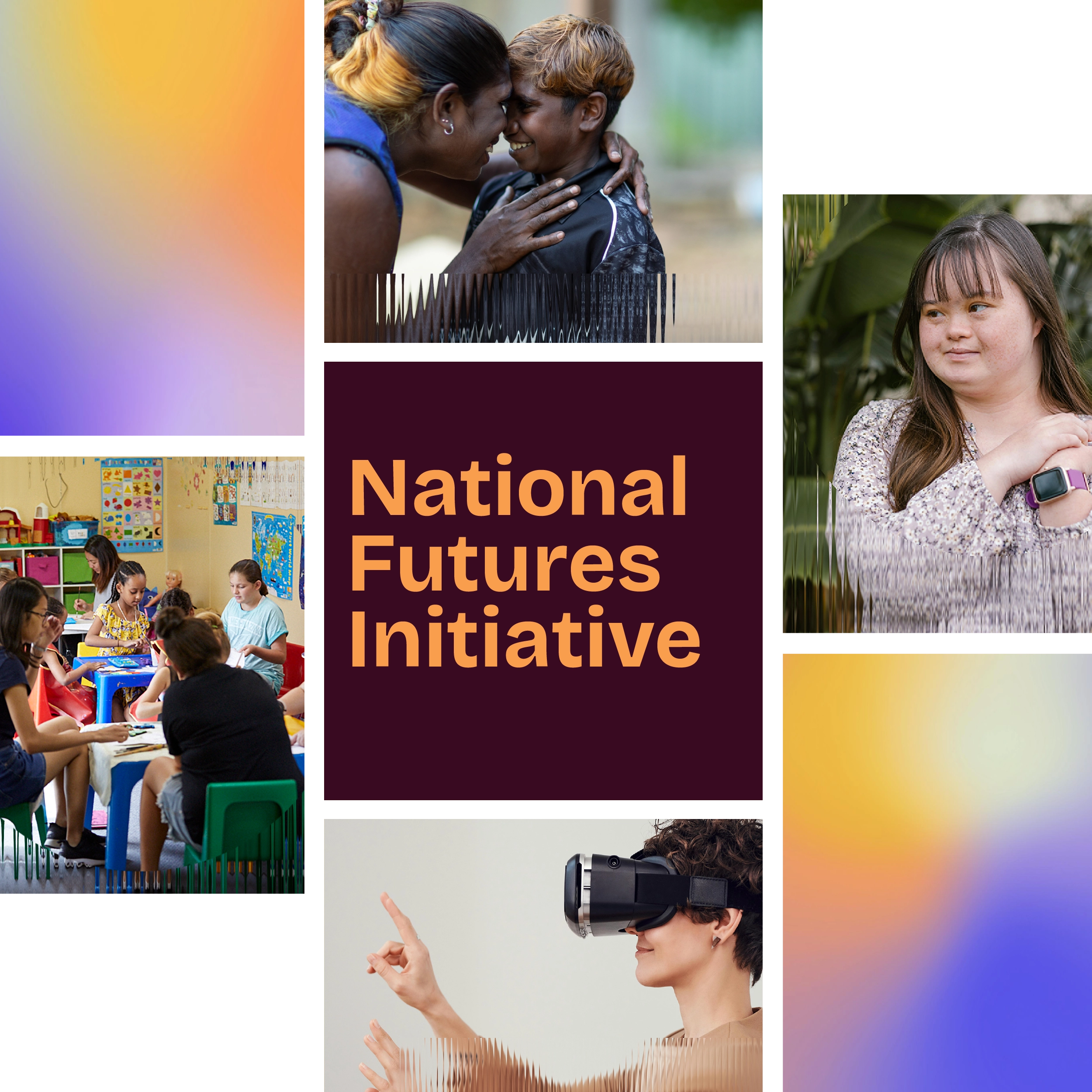
Informed by this work, we developed the ‘National Futures Initiative’, supported by five years of seed funding from the Paul Ramsay Foundation, with the ambition to build the alliances and do the work that will create a more just future for Australia.
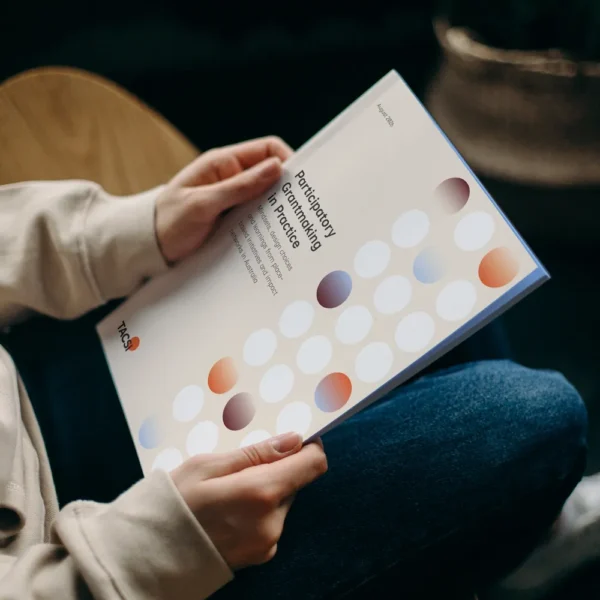
Paper: Practices for realising just futures
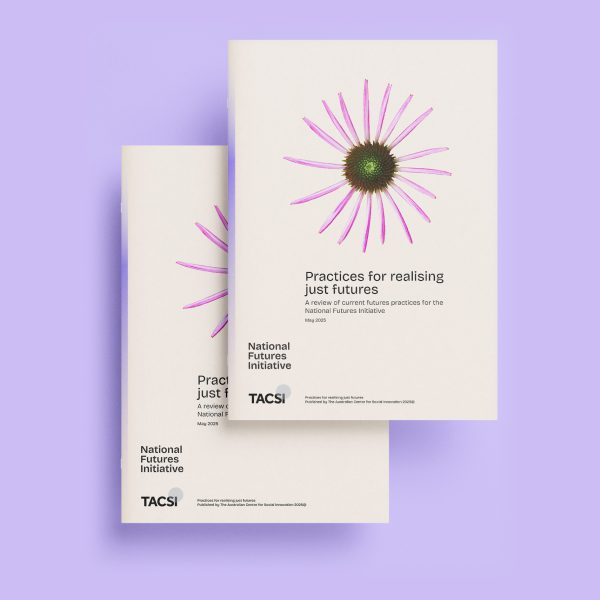
There are many ways to look at the future; some people approach it through trend analysis, others through collaborative art making, some turn to experts, others draw on their spirituality, some believe it’s important to look back before looking forward, while others prefer to build on unlikely inspiration.
To better understand these diverse practices and learn from what people have done before us, we’re written a series of papers. The first reviews existing futuring practices and sets forward a hypothesis for the practices we need to embrace as part of the National Futures Initiative, to get to a more just future.
Paper: Seven Circles of Design and Inquiry
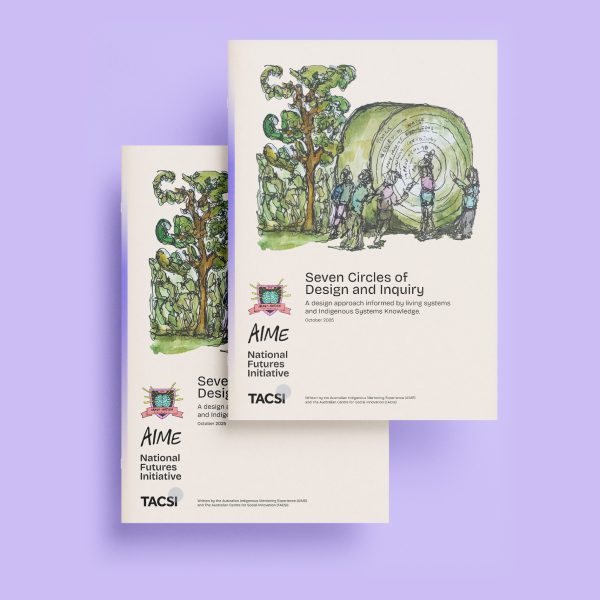
This paper tells the story of a non-Indigenous organisation (us) being guided through a re-orienting process based in living systems and Indigenous Systems Knowledges by AIME.
Told in two parts, first by AIME and then by the TACSI team, the paper introduces frameworks and protocols that illustrate practical processes for working with Indigenous Systems Knowledges.
If you’d like to know more about the National Futures Initiative, or you’re interested in being a part of it reach out to chris.vanstone@tacsi.org.au or kerry.jones@tacsi.org.au
Acknowledgements
A massive thank-you to everyone who gave their time to be part of the conversations with us: your ideas and conviction have given us so much to think about. Thank you, too, to the Paul Ramsay Foundation who supported this work.
Many thanks to the people who shaped our thinking:
Suhit Anantula – Strategic Innovator, formerly Director of Policy and Systems reform, SA Dep. Premier and Cabinet
Julie Ahrens – Lead at Our Town Berri
William Chan – Urbanist, futurist, Councillor.
Aunty Vickey Charles – An Alawa/Mara woman, cultural lead at TACSI
Joel Connelley – Creative Director, Blackbird
Sabina Curatolo – Leader in impact investing, market building and advocacy, Head of Impact at Bridges Australia, Board Director at TACSI
Nick Davis – Professor of Emerging Tech, advisor, speaker and co-director of the Human Technology Institute (HTI) at UTS
Glenn Davis – Corporate Lawyer at DMAW Lawyers and professional director on public and private boards
Cat Fay – Managing Partner, Community & Social Investment and ESG, Perpetual
Rod Glover – Economist, leader in policy and impact, Director of McKinnon Institute for Political Leadership
Kai Graylee – Executive Director, Akara Impact
Nicholas Gruen – Economist and commentator on economic reform and innovation, CEO of Lateral Economics
Laura Jade – Multidisciplinary artist fusing AI, biology, illumination, and interaction design
Arunn Jegan – Humanitarian Affairs Lead/Head of Mission at Médecins Sans Frontières
Indy Johar – Mission Steward at Dark Matter Lab
David Knox – Executive in energy industry, Chair of the Snowy Hydro, Chair of TACSI
Peter Lewis – Executive director at Essential Media, political commentator, co-founder Civility
Lesley Marsh – Data scientist at Accenture, artist and producer
Matthew Nguyen – Technology Fellow at the Ford Foundation
Maya Newell – Impact filmmaker (Gayby Baby, In My Blood it Runs)
Vanessa Turnbull Roberts – Bundjalung Widjabul Wia-bal woman, Human Rights advocate, lawyer and the Inaugural Commissioner for Aboriginal and Torres Strait Islander Children and Young People
Warren Roberts – Thunghutti Bundjalung man and the founder and CEO of YARN Australia
Alex Ryan – Specialist in innovation and systems design, former director at MaRS Discovery District
Jess Scully – Author, city maker, former Deputy Mayor of Sydney
Ambika Sethia – Philanthropy, social sector consulting, partnerships at Paul Ramsay Foundation
Louise Sylvan – Expert in consumer affairs policy analysis and advocacy, Board Director at TACSI
Doug Taylor – Chief Executive Officer at The Smith Family
Samantha Wild – Wakka Wakka and South Sea Islander woman. Leader in First Nations led health, social service, and policy design. Director at KPMG