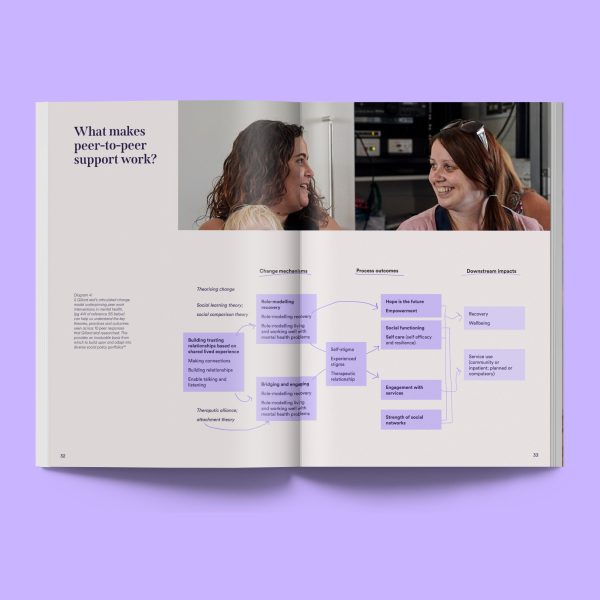


Read our social R&D paper
We believe that by developing R&D systems focused on tackling our biggest social issues, we can bridge the gap between institutions and people, and create systems and supports that are fit for now and the future.
Too often, we seem stuck in endless loops of fail → review → reform → repeat.
Problems don’t get solved, progress towards “better” remains intermittent (and is often stalled) and, not surprisingly, social inequalities persist and worsen. Yet, at the fringes, innovators are finding new ways to tackle long standing social challenges, and they’re succeeding despite the system around them. Imagine if we built a system that supported them.
Imagine if Australia had a more predictable, reliable and systematic way to identify, develop, implement and scale responses to our most pressing and complex social issues.
Research and development (R&D) systems, and the cluster of different organisations, services and capabilities that make them up (sometimes referred to as R&D ecosystems), have proven their value in driving innovation and improvement in high-performing industries.
Imagine if we took the best of contemporary R&D practices that are so common in other industries and sectors, and adapted and supplemented them to enhance our social impact systems.

Over the past few years, working alongside a number of partners, we’ve been trying to get our heads around what a social R&D ecosystem could – and should – look like.
There’s been great work done to define a social R&D process but when it came to designing R&D ecosystems, we had to start by looking at existing ecosystems in science and industry, before thinking about how to modify them to address the unique qualities of social challenges.
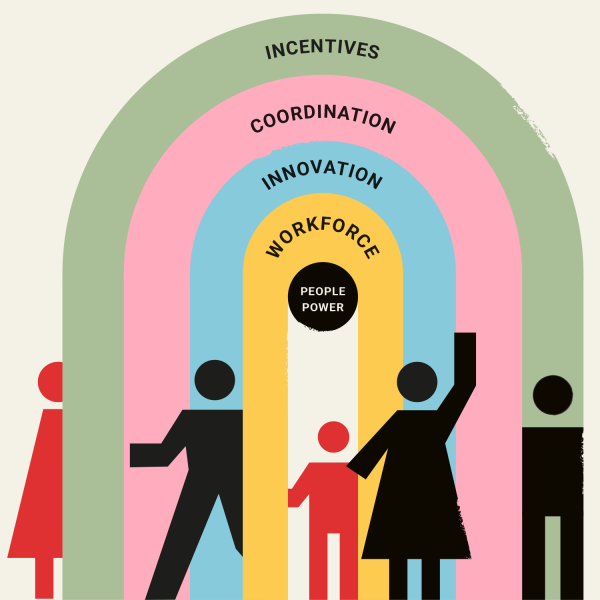
We analysed the components that recur across existing R&D ecosystems and found four: workforce, innovation, coordination and incentives.
- The workforce components of R&D ecosystems attract people into the workforce, connect them with work and build their capability to do R&D work.
- The innovation components support the innovation journey from ideation to implementation, via testing and trialling.
- The coordination components align the parts of the ecosystem to shared goals, so that the ecosystem is greater than the sum of its parts.
- The incentive components ensure there are good reasons and good rewards for doing R&D
These are the pieces that all effective R&D systems seem to have. They are the pieces that need to be designed and grown at the heart of an effective social R&D system.
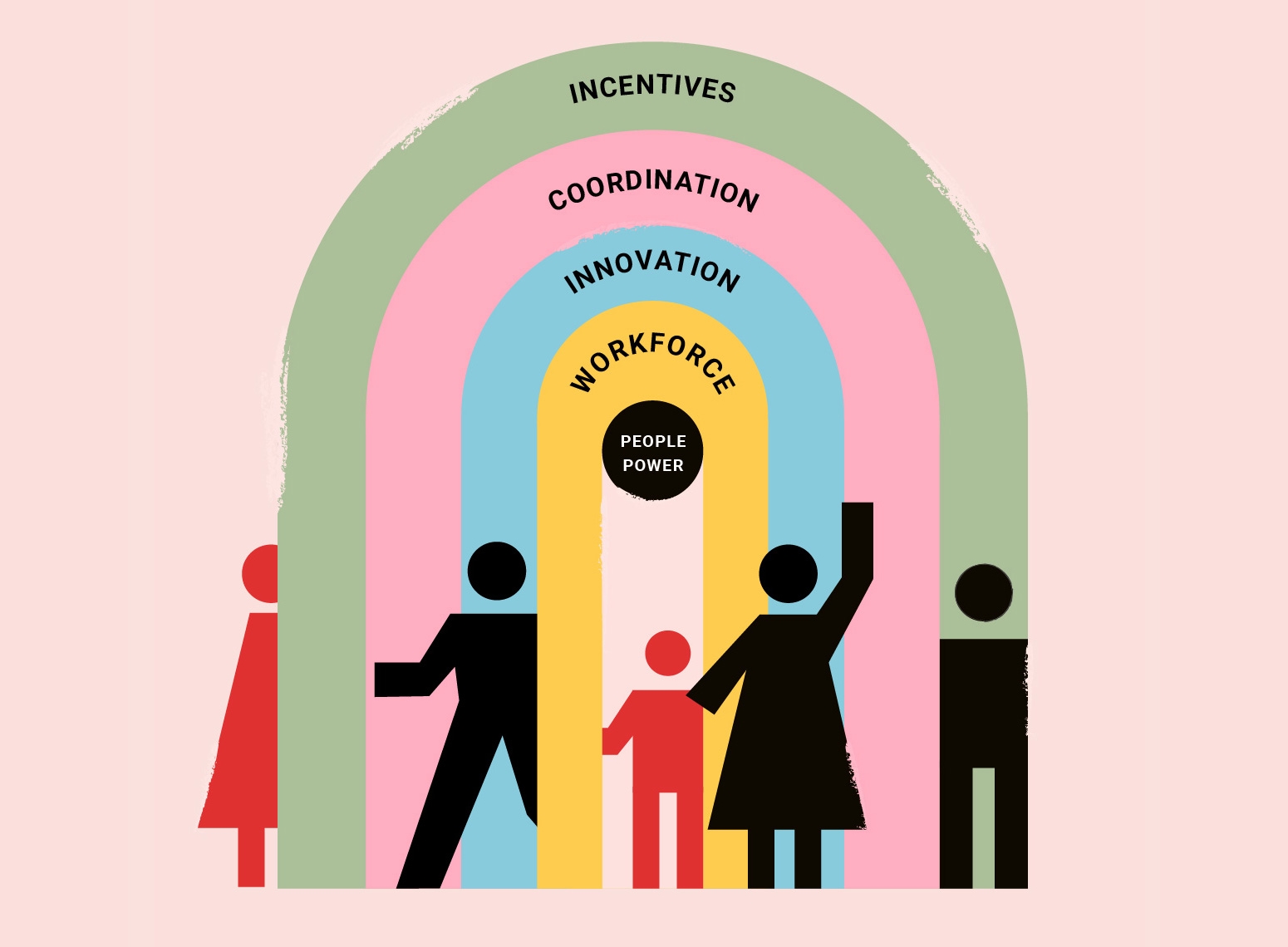
Social R&D needs to have people power at the centre, and distributed throughout. It sounds like a radical proposition, but it’s doable, and could be done based on methods and processes already in use by Australian governments and not-for-profit organisations today.
Practically, it would mean communities and people – especially those experiencing marginalisation – being involved in decision making, alongside professionals, at many different levels.
If community members and professionals worked together to determine and articulate preferred futures, through a deliberative process, we could be confident that R&D processes were creating a future that was representative of public interest.
If R&D funding was allocated by shared professional and public boards, we could be confident that researchers and innovators were accountable to the public.
If R&D processes involved the intended beneficiaries, we could be confident we were developing solutions that worked for the people they’re intended to support, and not just paying customers.

Explore our Social R&D Ecosystem Pattern Pack
Want to learn more?
Read our Social R&D paper and explore our Social R&D Ecosystem Pattern Pack. If you’d like to contribute, join the conversation or have questions, we’d love to hear from you. Reach out to Chris Vanstone, TACSI Co-CEO to learn more.