
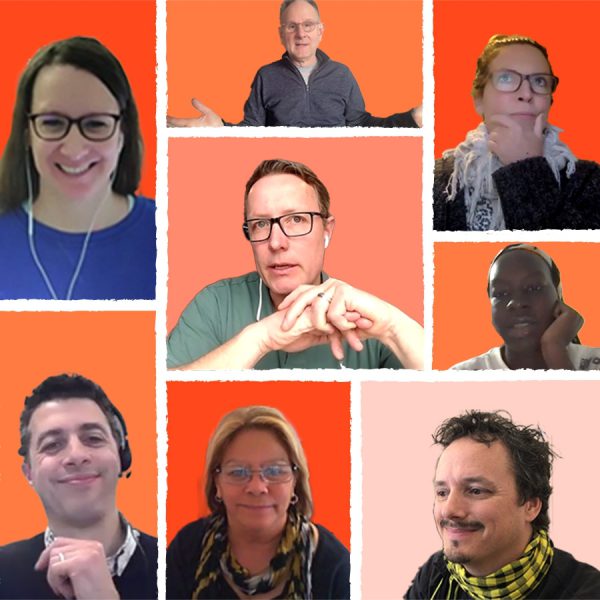
Many people are rightly concerned about escalating levels of mental distress in Australia
In June and July of 2022, funded by the Fay Fuller foundation, a diverse group of leaders came together to explore the question: What has changed in the last 200 years in Australia to lead to increased levels of mental distress, and what to do about it?
The group included Aboriginal leaders, young South Sudanese Australian leaders, foundations, academics, executives, a General Practitioner, a mental health nurse and mental health commissioners. Together, they agreed on what has changed and have put together a proposal of what next.
The participants, many veterans of conversations about mental health reform, remarked how the conversation series provided a space, unlike any other, to explore what’s fundamental to our wellness. At the same time they expressed urgency for action.
This video shares the story of those conversations and introduces the idea of a Future Wellness Accelerator as a potential strategy to address the unsustainable increase in poor mental health.
Across cultures, we agreed that three things had changed:
- Our relationships to the things that once gave meaning to our life have changed; Country, culture, language, religion, place, work.
- Children today have more exposure to options for who to be, but weaker ties to institutions, places and reference points to help them decide between options.
- ‘Who am I, who are we?’ is an existential question that haunts people across cultural backgrounds.
- This made us wonder how we should navigate meaning and belonging in the 21st century. What are the new infrastructures and cultures that will keep us strong?
- Our common understanding of the depths and complexity of the human experience – the light, the dark, the shade – has narrowed.
- We once acknowledged suffering as a universal truth; we talked of spirit and constitution. While Indigenous people and many non-western cultures still do, these concepts seem to be slipping out of our common usage.
- We wondered about the cultural concepts that we need to re-embrace and re-invent for the 21st century? And how to bring them alive through our institutions and societies.
- We discussed how many intuitive human functions, such as caring and compassion for those around you, have now, to a large extent, been ‘outsourced’ to institutions including mental health services. Yet they struggle to respond effectively.
- We wondered how to rebuild responsibilities for the wellness of self and others, and how to take responsibility for creating the future we want to live in.
We agreed that the solution lies with in-community responses
The group agreed that we can only stem the growth of mental distress in Australia by working beyond the current boundaries of the service system; in homes, schools, online communities, clubs, societies in culture and media.
The group agreed that in-community responses are the only way to de-escalate Australia’s mental health crisis. The only way to rebuild connections, identity and responsibility.
What next?
We’re now developing the design of a model to accelerate the development and uptake of in-community responses – a Future Wellness Accelerator. We’re learning from initiatives around the world to determine the operational models that best fits the vision and values shaped in the conversation series. Our hope is to trial the model in one portfolio area later in 2023.
Are you or do you know an organisation who’d be interested in supporting this model? We’d love to talk. Reach out to Carla Clarence at carla.clarence@tacsi.org.au.
Thank you to the participants of Australia’s Future Wellness Conversation Series
Aguang Daw, South Sudanese Minds
Carla Clarence, TACSI
Chris Vanstone, TACSI
David Beecham, Flinders University
David Kelly, Mental Health Commissioner SA
Elyse Cooke, Equity Trustees
Emily Fuller, Future Generation
Grant Hooper, Equity Trustees
Helen Sheppard, Uniting Care Wesley Bowden
Ivan Raymond, LBI Foundation
John Mannion, Mental Health Commissioner SA
Joe Sehee, Social Health Australia
Kelvin Jarrett, Community member
Kerry de Lorme, JDR Foundation
Leanne McPhee, TACSI
Liz Everard, Thera Farms Australia
Matthew Iasiello, Sahmri
Mel Legge, Uniting – Aboriginal Families Together
Nanchok Santino Chol, South Sudanese Minds
Niall Fay, Fay Fuller Foundation
Aunty Rosalind Coleman, Proud Kaurna & Narungga woman
Steven Ginsborg, General Practitioner
Tracey Waden, Flinders University