
What if the people closest to the complexity had more power over the money?
We often ask communities to tell us what they need. We invite them to share their experiences, participate in consultations and help shape solutions.
But when it comes to deciding where the money goes, the power often remains somewhere else. What would change if the people closest to an issue had a real say in how resources were distributed?
This is the question at the heart of our new paper: Participatory grantmaking for the future.
Rethinking how resources reach communities
Across Australia, conventional grantmaking systems have been built to manage institutional pressures like probity, accountability, and measurable impact. While effective for acute needs or established services, these traditional, distance-based approaches often strain when facing complex, interconnected challenges like entrenched disadvantage, mental health, and social fragmentation.
When funding decisions are made at a distance without relational knowledge, it can lead to fragmented funding, short-term timelines, and competitive dynamics that discourage collaboration.

What is participatory grantmaking?
Participatory grantmaking shifts decision-making power towards the people and communities most affected by the issues being addressed.
It challenges the assumption that those holding the money are best placed to decide how it should be spent – and recognises that communities hold forms of knowledge, expertise and insight that cannot be accessed from a distance.
For us, this isn’t simply about putting community members on a grants panel. It’s about changing the relationship between money, power and community.
What the paper explores
- How participatory grantmaking leads to better-informed decisions, stronger relationships, capability uplift, and more equitable outcomes for historically marginalised groups.
- Why seeing the funding process itself as an investment builds enduring relational trust, social cohesion, and a culture of collaboration that outlasts the grant round.
- Connecting participatory grantmaking to the broader ecosystem of First Nations self-determination, disability rights, community wealth building, and participatory philanthropy.
- Shifting orientations from “just the money” or “just the outputs” toward collective stewardship, relational accountability, and shared agency.
- Practical guidance on handling unlearning, conflict, risk and compliance, speed versus depth, and ongoing power asymmetries.
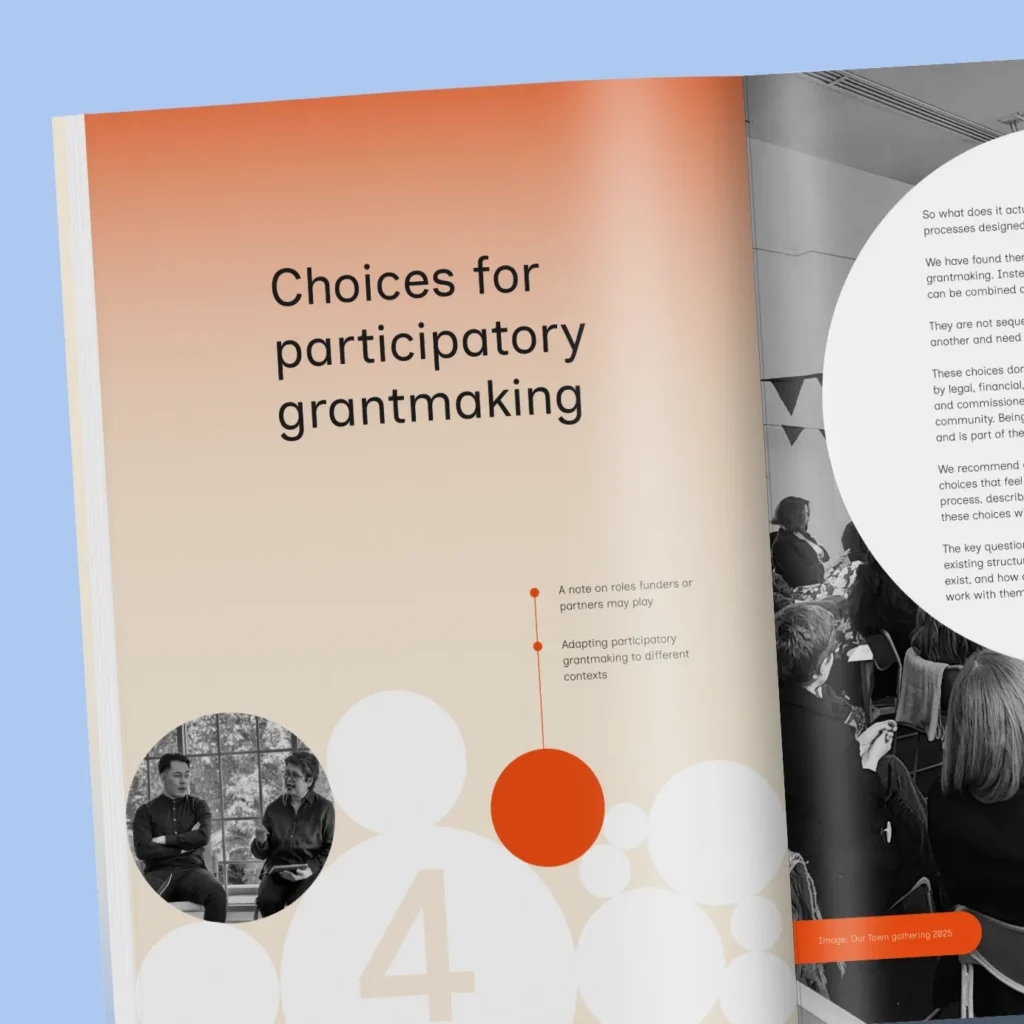
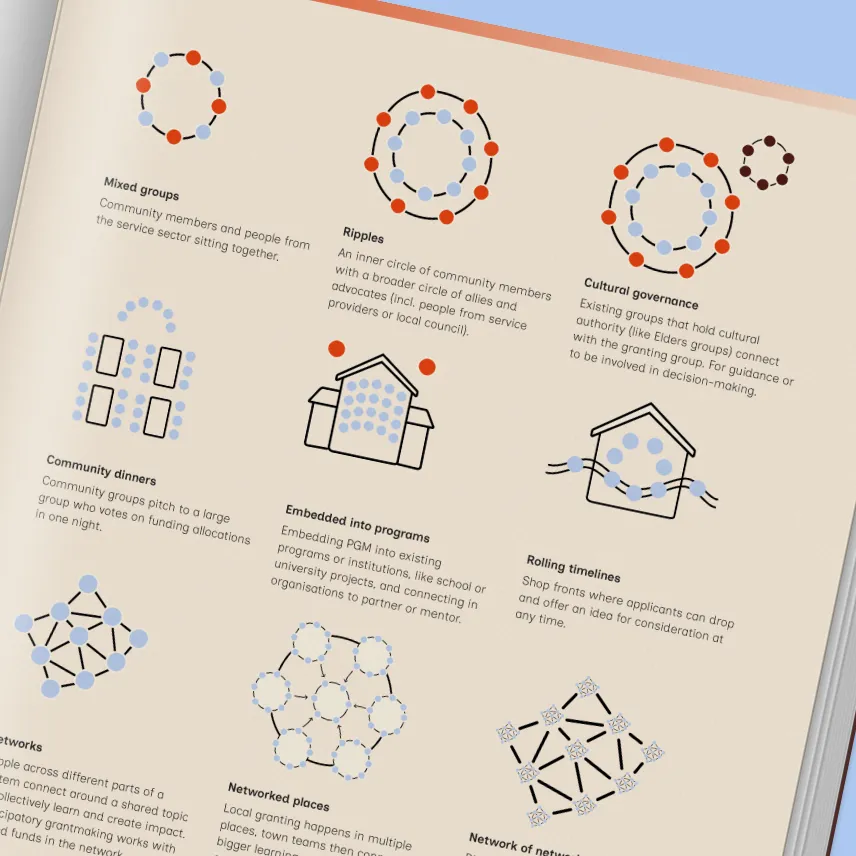
- Different models for embedding participatory grantmaking into place-based initiatives, impact networks, and community-led experiments.
Who this paper is for
- Philanthropy & funders: Looking to build authentic community trust, improve funding relevance, and diversify what counts as knowledge.
- Government & commissioners: Seeking to increase civic participation, strengthen local ownership, and bridge the gap between policy and on-the-ground reality.
- Communities & local leaders: Looking to build local decision-making infrastructure, develop capability, and move from dependency to self-determination over resources.
Download the paper
Fill in the form below to download the paper. A download link will appear on submission. We’ll also send you an email containing the link for future reference.