
What is social innovation?
While social innovation has been a constant throughout human history, it has only emerged as a formal field of practice and study over the last few decades.
Despite existing forever, social innovation and the enabling conditions for it are not as well understood as innovation in the commercial and scientific sectors.
The scope of social innovation includes:
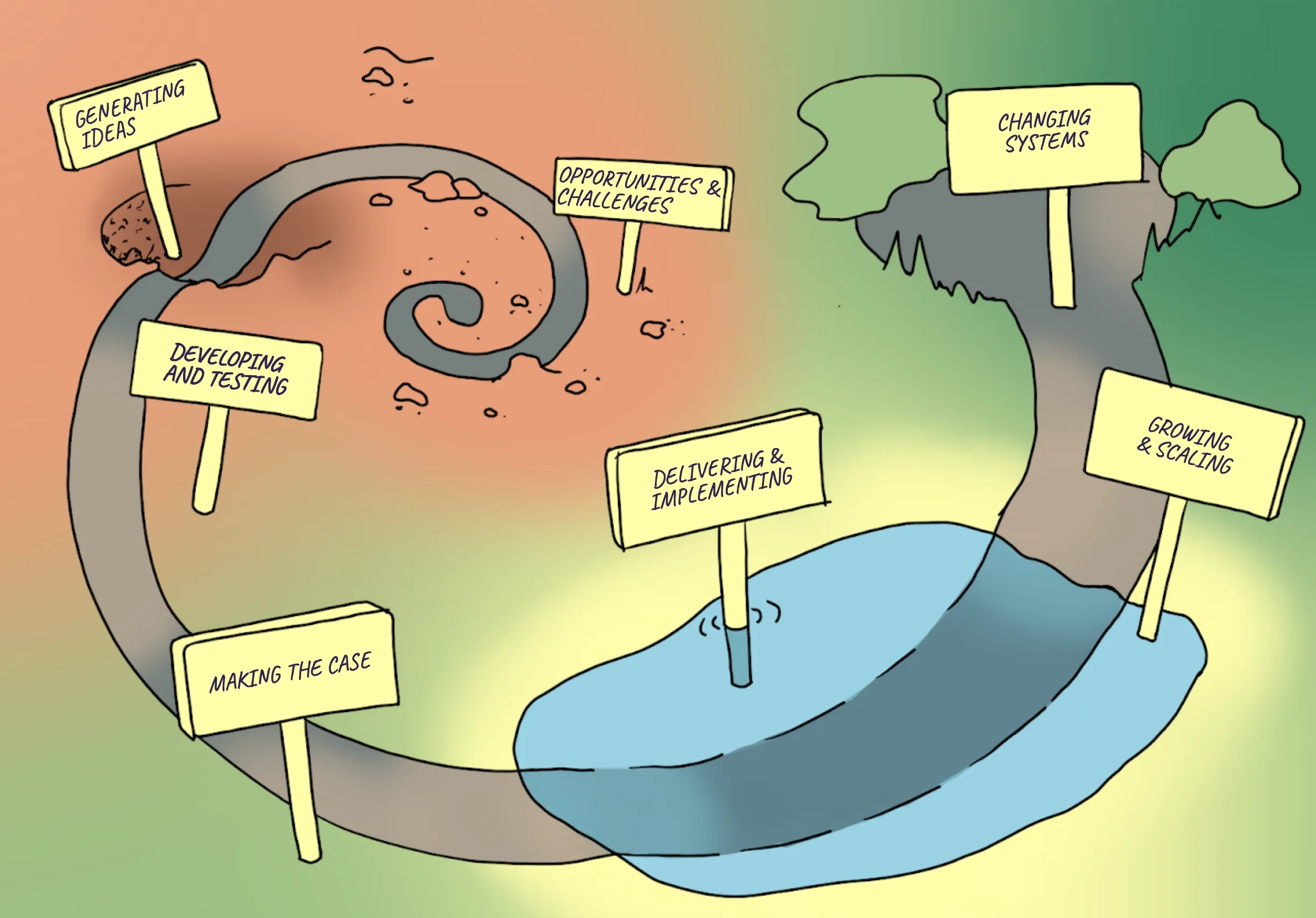
- Identifying opportunities, generating ideas, developing and testing, making the case, delivering and implementing, growing and scaling and changing systems.
- The ‘hot’ of activism and radical experiments and the ‘cool’ of law, policy and regulation.
- Products, services, systems, organisations, movements and new ways of living.
- For-purpose innovation done by communities, not for profits, governments, philanthropy, businesses and social enterprises.
Informed by: Social Innovation: How Societies Find the Power to Change
Given this broad scope social innovation is an eclectic set of know-how and practices – but with some shared foundations.
Where do social innovations come from?
Social innovations can result from an individual with a good idea but this is not something you can always depend on. More reliably, social innovations result from social processes with a focus on creating social outcomes – social innovation is social in means and ends.
The phrase ‘social innovation’ is not in broad usage and the people behind some of the best examples of social innovation would probably not describe their work that way. However, recognising social purpose innovation as a distinct capability that requires a unique set of enabling conditions – just like commercial and scientific R&D – could help us make more reliable progress on our most pressing societal issues.
What does social innovation look like?
Social innovation can look like many different things; here are some well documented case studies:
- Villagers in Vietnam helped develop and implement a ‘positive deviance’ program that supported neighbours to exchange effective strategies for food preparation and hygiene. Ultimately shifting nutritional outcomes for 50,000 malnourished children across 250 communities.
- Mothers living with HIV in Kenya helped develop Mothers2Mothers, a peer-to-peer program that virtually eliminated mother-to-child HIV transmission for participants. Over the last decade, the program has supported millions of women across ten African countries while creating 12,000 jobs.
- Families, practitioners and researchers in Australia co-designed the peer-to-peer model Family by Family, a scaffolded family network support program that helps other families make the changes they want in their lives. The program reduces risk of entry into out of home care by 44% and visitations to hospital emergency departments by 6%.
- Randomly selected citizens in Ireland deliberated over months to address the politically entrenched issue of abortion, informed by multiple expert witnesses. Their recommendation to legalise abortion was instrumental in shifting public opinion and breaking decades long political deadlock.
- The South Australian Government, disability advocacy groups, and people living with severe and profound disabilities came together to shape how to act on an election commitment to transfer government supported accommodation to the not for profit sector. The process ultimately led to the government deciding not to withdraw from providing supported accommodation, but instead to become an accredited NDIS provider.
- Australian innovators AIME built IMAGI-NATION, a demonstration of a pro-social social media platform informed by Indigenous systems knowledge in response to toxic social media. The platform supports the creation of unlikely connections and constructive relationships around the planet.
Social innovation in complexity
Over the last 16 years, TACSI have been focused on developing repeatable approaches for tackling Australia’s toughest social challenges. Whether working in domestic violence or First Nations self-determination, our work has focused on contexts where power imbalances areprofound andwhere previous efforts have failed to break cycles of inequity.
In complex settings, we’ve found that social innovation can be reliably achieved through processes that emphasise:
- Lived experience involvement: People with lived experience of navigating tough situations have unique insight into what does and doesn’t work.
- Equitable collaboration: Creating spaces and processes that bring together diverse expertise e.g. lived expertise, research expertise and practice expertise.
- Systems awareness: Tough social challenges are held in place by a range of visible and invisible forces, making progress on these challenges requires seeing those forces and recognising their interconnectedness.
- Imagination: Finding alternative responses to longstanding challenges requires permission, time and inspiration to break free from status quo responses.
- Learning through doing: The complexity of social contexts mean that it’s impossible to know what works in isolation without trying it out – there is no evidence of what will work in your context tomorrow.
Social innovation practices
There are many different practical approaches to doing social innovation. Each has been developed in response to different contexts and each informed by different disciplines. These practices can be used as a complement or replacement for traditional approaches to innovation, reform and development.
Examples of social innovation practices include:
Co-design
An approach to innovation that brings together lived expertise with other kinds of expertise e.g. (research, practice) in a structured process to design practice, services, policies and systems. Co-design is an alternative to professional-only innovation approaches — especially when working with communities who experience marginalisation.
Peer-to-Peer
Peer-to-peer models create change by connecting peers who have got through tough times with peers currently in tough times who want to do the same. Peer-to-peer is alternative and a complement to professional service delivery in areas including prevention, early intervention and recovery.
Systems Innovation
A practice for creating change in complex systems through participatory processes that include diverse stakeholders, especially those with lived experience. Systems innovation is particularly relevant for government policy, service system reform, and long-term philanthropic strategy. It is an alternative to top-down or basic consultation approaches.
Community Innovation
An approach to building the capabilities and infrastructure for communities to lead their own change that typically involves strengthening skills in innovation, social change, imagination, and participatory granting. Relevant to community-led, place-based initiatives where communities play a major role in outcomes. An alternative or complement to a collective impact approach.
Creative Allyship
Practices that catalyse and support creative, practical action toward reconciliation, self-determination, and change with First Nations people. Relevant to settlers on colonised lands as a complement to cultural awareness training and understanding of privilege.
Impact Networks
An approach to organising diverse stakeholders to drive systemic change that emphasises changemaker wellbeing, relationships, systems awareness, and independent aligned action. Relevant for enabling change in complex systems, particularly where the system producing an outcome lacks formal structure. An alternative or complement to top-down systems-change approaches.
Social R&D
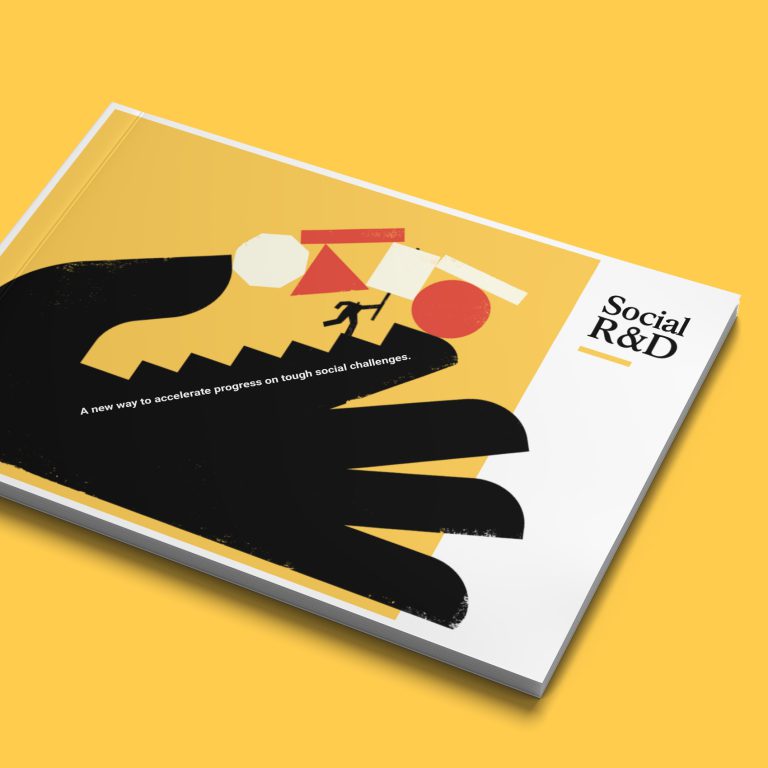
An emerging field focused on creating R&D systems that advance social outcomes. These combine the best of scientific and industry R&D with participatory and deliberative processes. Particularly relevant to designing systems for commissioning and funding innovation. An alternative to laissez-faire or bespoke approaches to innovation.
Just Futures
An emerging practice focused on catalysing action toward more equitable futures that emphasises public participation, unlikely connections, imagination, diverse knowledges, charismatic demonstrations and influencing resources. An alternative to professional-only futuring processes when developing long-term strategy.
Indigenous Systems Knowledge
A growing global movement of Indigenous practitioners applying Indigenous ways of knowing and being to address complex systemic challenges for all people. Relevant across complex problems and design activities. A complement and alternative to dominant-culture-only innovation.
Positive Deviance
A practice for working with communities to identify surprisingly effective behaviours, and then increase the take-up of those behaviours. Developed in an international development context but relevant to a broad range of settings including mainstream service-systems.
Deliberative Democracy
An approach to shared decision making that uses randomly selected representative groups of the public (mini-publics) to deliberate and provide policy direction on highly contested issues. Relevant for decision making in highly contested areas, e.g. where political parties can’t or don’t want to make a decision.
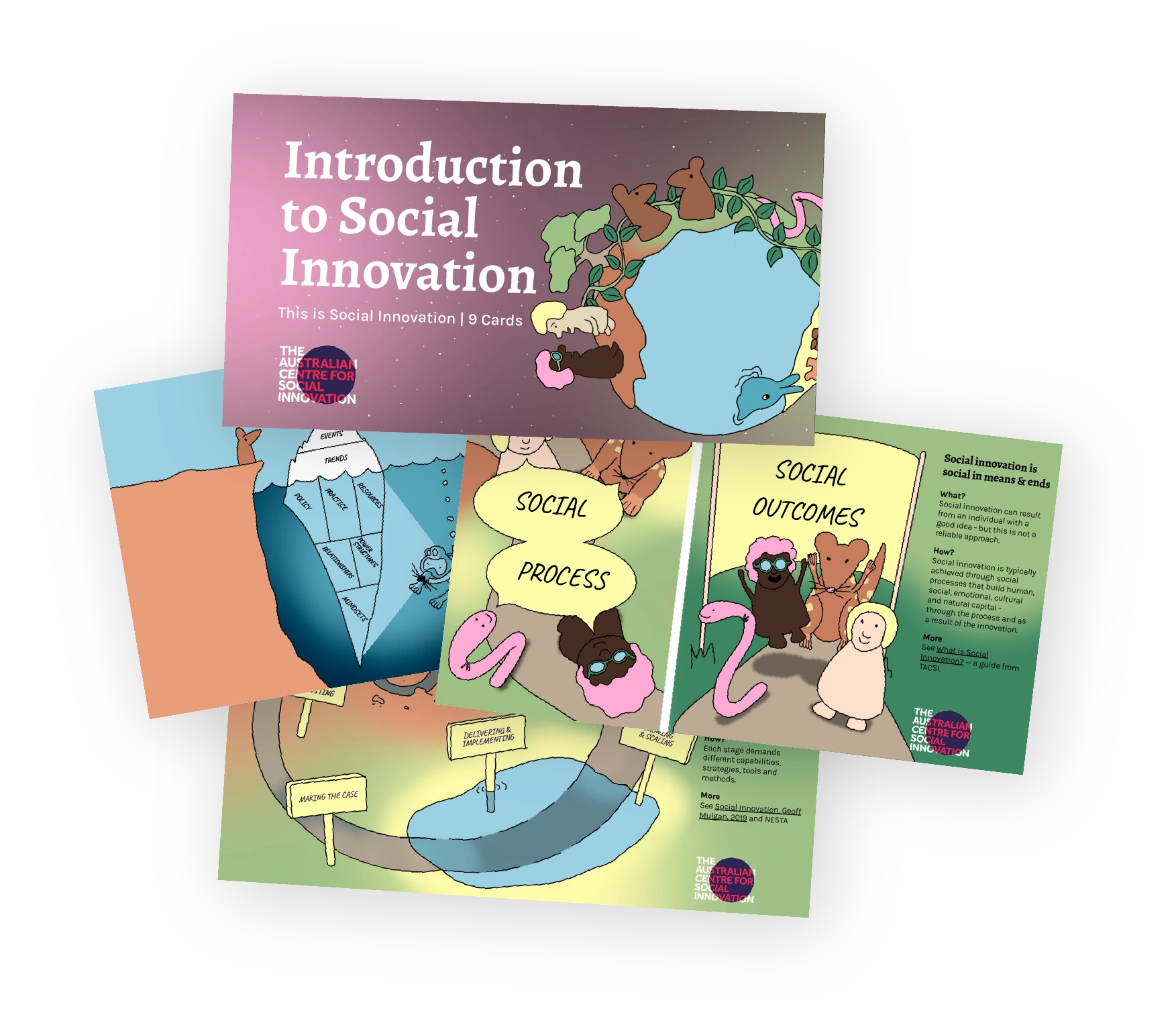
Download our FREE Introduction to Social Innovation deck
Written by our co-CEO Chris Vanstone, this guide is broken into nine clear sections to make it easy to read and share with colleagues and stakeholders.
"*" indicates required fields